

3 years ago, good SEO meant helping a full webpage rank in Google. You would focus on keywords, metadata, backlinks, internal links, page speed, and content quality for better rankings. Those fundamentals still matter, but they now serve a wider purpose.
The same technical and content signals that help a page rank also help AI systems decide whether the page is worth reading, extracting, and citing.
If your website is difficult to crawl, poorly structured, thin on original information, or weak on trust signals, it will struggle in both traditional search and AI-led discovery.
It’s safe to say that traditional SEO and AI discoverability are now “two sides of the same coin”:
Search engines still need clean websites, and AI systems need clean source material. A strong search strategy has to serve both.
1. SEO still matters, but it now feeds AI answers too
AI search has not removed the need for SEO completely. It has made SEO more technical, more structured, and more closely connected to brand authority. Google still needs to crawl your website, understand your pages, and decide whether your content is useful enough to rank.
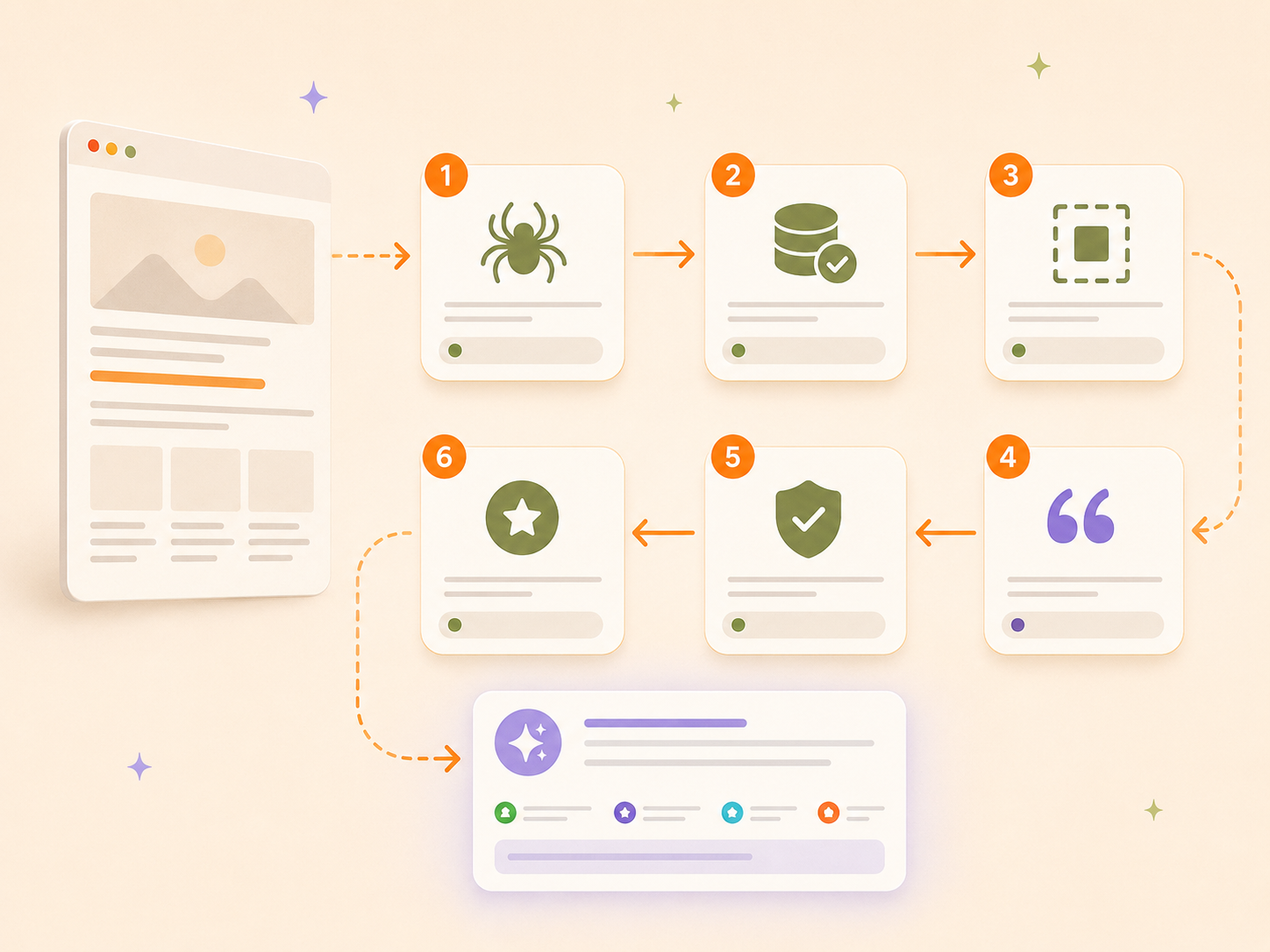
But AI systems add another layer. They may not simply show users ten links. They may summarize the answer, compare options, cite sources, and pull facts from different websites into one response.
So the goal is to become part of the generated answer. And, for that to happen, your content must be:
- Easy to crawl.
- Easy to index.
- Easy to extract.
- Easy to quote.
- Easy to verify.
- Strong enough to trust.
A vague or generic page may still get indexed, but it is less likely to become a useful citation. A page with clear answers, structured sections, source-backed claims, and expert input is more likely to be used by AI systems.
2. Search is moving from keyword matching to meaning matching
Traditional SEO was built around keywords. A user typed a query, and Google matched that query with pages that seemed relevant. The best pages are ranked based on content quality, links, technical health, authority, and other signals.
That model still exists, but AI search adds a semantic layer. It tries to understand the meaning behind the query, not just the words inside it. This changes how content should be planned and written.
For example, a page targeting “best CRM for healthcare” should not only repeat that phrase in headings and paragraphs. It should explain the full decision context:
- What healthcare teams need from a CRM?
- How do patient communication workflows affect tool selection?
- Which privacy and compliance factors influence the buying process?
- What integrations matter for sales, support, and operations?
- How CRM requirements differ across clinics, hospitals, and healthcare networks.
This is how content becomes more useful for AI systems. The system can connect the topic to related entities, workflows, regulations, software categories, and buying criteria. Keywords still help define the page, but meaning, structure, and topical depth help the page become a better source.
3. AI systems break one user question into many smaller searches
AI search can split one broad prompt into several smaller questions, retrieve information from multiple places, and then combine the answers. This is known as “Query Fan-Out,” where an LLM breaks a complex user prompt into smaller sub-queries and searches them at the same time.
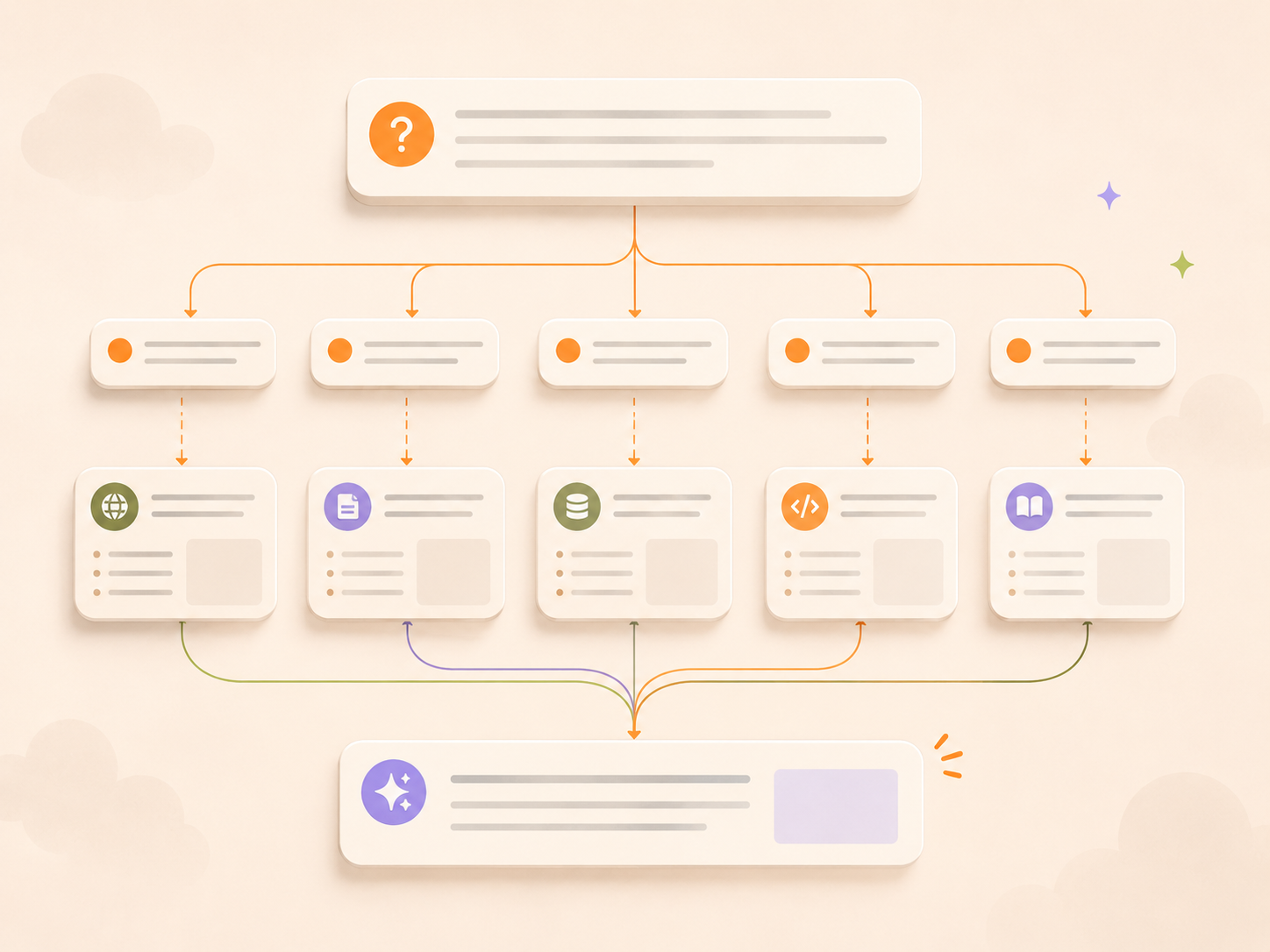
Take this user query: “Which messaging platform is best for a mid-market healthcare company using Salesforce?”
An AI system wouldn’t just look for one exact-match page but would look across several related areas:
This changes how SEO teams should build content. Instead of creating one broad page for every high-volume keyword, teams need clusters that answer the smaller questions inside larger buying journeys.
A strong cluster may include a healthcare messaging solution page, a Salesforce SMS integration page, a HIPAA messaging guide, competitor comparison pages, use-case pages, technical documentation, and implementation FAQs.
Together, these pages give AI systems more source material. They also give human buyers a better path from research to decision.
4. Copied and low-quality content will lose a lot
The internet is already flooded. If your page only repeats what already exists across the web, it has little reason to be selected. It may be crawlable, and it may even be long, but length alone does not make it source-worthy.
That’s where ‘information gain’ becomes much more important. Information gain means your page adds something new or more useful to the topic. Its value lies in fresh, unique, and verifiable information over content that repeats what already exists in training data.
A copied article usually has the same definition, the same five benefits, the same generic examples, the same FAQs, and the same broad conclusion as every other article on the topic. A stronger article adds something extra, such as:
- First-party data.
- Customer examples.
- Product screenshots.
- Benchmarks.
- Expert quotes.
- Real workflows.
- Industry-specific use cases.
- Clear comparison logic.
This is your biggest challenge. Not only do you have to create more content, but you have to find unique things to say, too.
Before publishing, ask yourself three questions:
- Does this page add anything competitors have missed?
- Does the answer come from real experience, data, or expert input?
- Can a reader make a better decision after reading it?
If the answer is no, your process needs more work.
5. Each section should be written like a standalone answer
AI systems may pull one paragraph, one definition, one table, or one answer block. That means each section needs to make sense on its own.
This is why vague headers are becoming less useful. Headers like “Overview,” “Key Benefits,” or “Why It Matters” do not provide enough context. They force readers and AI systems to infer the topic.

For example, let’s say we decide to write an article about “AI discoverability”, here are how bad and good headers would look in that article:
A strong section should start with a direct answer, then build context around it. It should support the point with examples, data, proof, or a clear process. Bullets and tables should support the explanation, not replace it.
This writing and the process might sound robotic, but it is clear writing with rhythm.
Where does this leave you?
SEO and AI discoverability are not two separate workstreams. They share the same foundation: clean structure, original content, clear answers, and earned trust.
The brands that will show up in AI-generated answers are the ones already doing the harder version of SEO, writing content that adds something real, structured in a way that's easy to extract, and backed by enough authority to be worth citing.
If your content wouldn't make a good source, it won't become one.
Frequently Asked Questions
Is SEO still relevant in 2026?
Yes, SEO is still relevant in 2026, but its role has changed. It is slowly moving from ranking pages and driving clicks from Google to helping brands become discoverable across classic search, AI Overviews, AI Mode, ChatGPT, Perplexity, Gemini, Copilot, and other answer-led discovery channels. The fundamentals still matter. Your website must be crawlable, indexable, fast, well-structured, and trusted. But these fundamentals now support a broader goal: making your content usable as source material for AI-generated answers.
What is AI discoverability?
AI discoverability is the ability of your brand, content, product, or website to appear inside AI-generated answers. This includes citations, recommendations, summaries, comparisons, and mentions across AI search experiences.
What is the difference between SEO and GEO?
SEO gets your pages ranking in search engines. GEO, or Generative Engine Optimization, gets your content cited in AI-generated answers. The two now overlap heavily because a weak SEO foundation will hurt your GEO performance. If your content can't be crawled, trusted, or understood by search engines, it won't appear in AI answers either.
What is query fan-out in AI search?
Query fan-out is the process where an AI system breaks one broad user question into several smaller searches or retrieval tasks. Instead of looking for one exact page, the system may collect information from multiple sources and combine it into one answer. For example, the query “Which messaging platform is best for a mid-market healthcare company using Salesforce?” may trigger smaller searches around healthcare messaging, Salesforce integrations, HIPAA-ready workflows, mid-market software, pricing, and vendor comparisons.